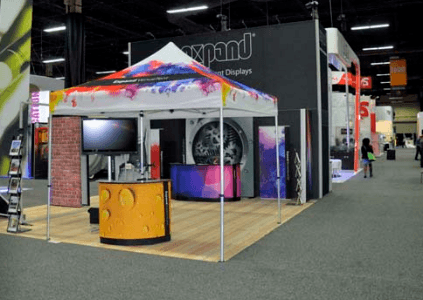
The trade show floor of 2026 looks nothing like it did a decade ago. Where once rows of static banners and brochure-laden tables dominated convention centres, today’s exhibitors are deploying virtual reality headsets, motion simulators, and AI-driven photo installations that transform a ten-by-ten booth into something closer to an amusement park ride. The shift has been dramatic, commercially effective, and—for the regulatory frameworks governing these events—deeply disorienting.
The US trade show industry, valued at $15.8 billion in 2024 and projected to reach $17.3 billion by 2028, is no longer a passive marketing channel. It is an experiential one. And the legal infrastructure surrounding it was largely written for a world of pop-up displays and carpet samples.
From Static Displays to Full-Body Experiences
The catalyst behind this regulatory tension is straightforward: trade show entertainment has evolved from visual to physical. Attendees are no longer just looking at products. They are strapping into VR headsets, gripping racing simulator steering wheels, and stepping onto motion platforms that tilt and shake. According to the Center for Exhibition Industry Research, interactive exhibits are 52% more likely to prompt attendees to stop and engage compared to static setups. Gamified booths see 40% higher foot traffic on average.
These numbers have made the business case irresistible. But they have also introduced liability questions that most venue contracts and exhibitor agreements were never designed to address. When an attendee trips over a VR cable, experiences motion sickness from a simulator, or collides with another visitor while wearing a headset, the question of responsibility becomes murky. Is it the exhibitor’s fault? The venue’s? The technology provider’s?
Liability in an Immersive World
Most major US convention centres still operate under general liability frameworks drafted before immersive technology entered the exhibition hall. Standard exhibitor agreements typically cover property damage and basic slip-and-fall incidents. They rarely account for the specific risks introduced by VR equipment, motion platforms, or competitive gaming setups where adrenaline and physical movement intersect.
Insurance carriers have begun adjusting. Several specialty event insurance providers now offer riders specifically covering interactive technology activations, including equipment malfunction, participant injury during VR use, and data liability for digital lead capture systems. But the patchwork nature of these policies means exhibitors often navigate compliance on a show-by-show basis.
The challenge intensifies for companies operating across multiple states and provinces. Fire codes, ADA compliance requirements, electrical load restrictions, and crowd density regulations vary significantly between jurisdictions. A VR activation that passes inspection at the Las Vegas Convention Center may face entirely different scrutiny at McCormick Place in Chicago or the Metro Toronto Convention Centre.
The Rise of Turnkey Compliance
This complexity has given rise to a category of provider that barely existed five years ago: the turnkey interactive entertainment company. Rather than asking exhibitors to source VR hardware, hire technicians, negotiate venue requirements, and manage insurance independently, these firms handle the entire chain from logistics to on-site support.
Los Angeles-based Los Virtuality – Interactive Entertainment is one such operation, providing VR games, escape rooms, simulators, and AI photo booths to corporate events across all 50 US states and major Canadian cities. The company’s model—nationwide setup and support with dedicated technical staff—reflects a broader industry trend toward outsourcing not just the entertainment itself but the compliance burden that comes with it.
For event planners, this shift matters. When 81% of trade show attendees hold buying authority, according to CEIR data, the stakes of a compliance failure extend well beyond a fine. A shutdown booth on day one of a three-day conference can mean hundreds of thousands in lost pipeline.
Data Capture Adds Another Layer
The regulatory picture grows more complex when data enters the equation. Modern trade show games are not just entertainment—they are lead generation engines. Leaderboard competitions, for instance, require participants to register before playing, creating a natural exchange: engagement for contact information. This gamified lead capture has proven effective, with studies showing gamification can boost lead generation by up to 40%.
But the collection of personal data at physical events now intersects with an increasingly assertive privacy landscape. California’s CCPA, Virginia’s CDPA, and a growing number of state-level privacy laws impose disclosure and consent requirements that apply whether data is collected online or at a convention centre kiosk. For exhibitors running interactive installations that capture names, emails, company information, and engagement metrics, compliance is no longer optional.
Some forward-thinking exhibitors have begun embedding privacy disclosures directly into the game registration flow, making consent part of the experience rather than an awkward interruption. It is an elegant solution, but one that requires careful legal vetting across jurisdictions.
See also: Business Funding for Small Business: Strategic Options and Application Tips
What Comes Next
The trade show industry’s shift toward interactive entertainment shows no signs of slowing. The global exhibition industry is valued at $45.5 billion in 2026 and projected to reach $67.4 billion by 2033, according to industry analysts. As immersive technology becomes standard rather than novel, regulatory frameworks will inevitably catch up. Several industry bodies, including the International Association of Exhibitions and Events, have begun developing best practice guidelines for interactive activations.
Until formal standards emerge, the burden falls on exhibitors and their partners to navigate the patchwork. Companies that treat compliance as an afterthought risk more than fines—they risk the very engagement that makes interactive entertainment worth deploying in the first place. The exhibitors getting this right are the ones who recognised early that in a world of immersive brand experiences, the experience includes the paperwork.