You were expecting tiny fingers, sleepy stretches, and maybe a lot of feeding questions. Then you notice a tooth, or something that looks like one, in your newborn’s mouth. That can be unsettling fast. You may wonder if it is normal, if it will hurt during nursing, or if your baby could choke on it. Those worries make sense. If you need reassurance, gentle dental care for children in Crenshaw can help you understand what to do next.
Natal and neonatal teeth are teeth present at birth or teeth that erupt within the first month of life. They are uncommon, but they do happen. Some are stable and harmless. Others are loose, sharp, or tied to feeding problems, which is why a pediatric dentist looks closely at how the tooth sits, how firm it is, and whether it is causing pain or injury.
Natal teeth and neonatal teeth are similar, but timing matters
Natal teeth are present when a baby is born. Neonatal teeth appear during the first 30 days after birth. In both cases, these early teeth are often part of the normal baby tooth set, not extra teeth, though an exam is needed to tell the difference.
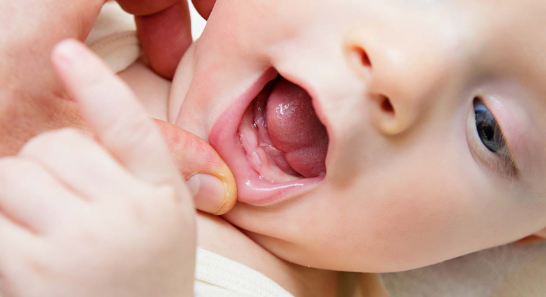
Parents usually spot them during feeding, when the baby clamps down, or while wiping the gums. Sometimes the tooth looks small, yellowish, or not fully formed. That appearance can make it seem more alarming than it is. The bigger concern is not how it looks. The bigger concern is whether it is stable and whether it is harming the baby or the nursing parent.
A newborn with an early tooth may feed normally, or feeding may turn into a struggle. A sharp edge can irritate the underside of the tongue. A loose tooth can create a real safety concern. According to MedlinePlus information on natal teeth, a tooth that is loose may need removal because of aspiration risk.
What a pediatric dentist checks in a newborn’s mouth
When a pediatric dentist examines a baby with early erupted teeth, the visit is focused and practical. The first question is whether the tooth is firm. If it moves too much, that changes the plan right away. A loose tooth in a newborn is not something to watch casually at home.
The dentist also checks whether the tooth is part of the normal primary dentition or an extra tooth. That matters because treatment can differ. The shape and root development matter too. Some of these teeth have weak roots or very little root structure, which makes them less stable.
The soft tissues get just as much attention as the tooth. A sharp tooth can rub the tongue and create an ulcer, sometimes called Riga Fede disease. If your baby cries during feeds, pulls away, or has a sore under the tongue, that may be part of the reason. The dentist also looks for signs that the tooth is affecting latch, milk transfer, or the comfort of the breastfeeding parent.
This is also where newborn teeth dental evaluation becomes more than a label. It is a safety check, a feeding check, and a pain check all at once.
Early baby teeth can be harmless, or they can disrupt feeding and comfort
Some families hear that these teeth are rare and assume rare means dangerous. Not always. A firm tooth that is not injuring tissue may only need monitoring. The problem is that it is hard to judge stability and tissue damage on your own, especially when you are already running on very little sleep.
If the tooth is sharp but stable, the dentist may smooth the edge or recommend close follow up. If the tooth is very mobile, extraction may be the safer choice. If the baby is feeding well and the mouth tissues look healthy, observation may be enough.
The American Academy of Pediatric Dentistry supports early infant oral health care and a dental home by age one. Their guidance on perinatal and infant oral health care reflects the value of early assessment when something unusual appears in a newborn’s mouth.
What pediatric dental care for infant teeth may involve
| Finding | What it can cause | What the pediatric dentist may do |
| Firm, stable tooth | No symptoms or mild feeding irritation | Monitor growth, check latch impact, give home care advice |
| Sharp tooth edge | Tongue sore, pain with feeding, nipple discomfort | Smooth or adjust the edge, monitor healing |
| Loose or highly mobile tooth | Risk of swallowing or aspiration | Consider removal after exam |
| Extra tooth suspected | Crowding concerns or eruption issues later | Evaluate position and decide on monitoring or treatment |
This is where a lot of parents feel torn. You do not want anything done unless it is needed, but you also do not want to ignore something that could interfere with feeding or safety. That tension is normal. A good exam clears up whether this is a watch and wait situation or a treat now situation.
Three steps you can take right away
1. Look for feeding and comfort changes. Notice whether your baby is latching, staying latched, and feeding without obvious pain. Check for sores under the tongue and for unusual fussing during feeds.
2. Do not try to wiggle or remove the tooth. Even if it looks barely attached, leave it alone. Movement can irritate tissue and create more risk. If it seems loose, arrange an urgent dental or pediatric evaluation.
3. Schedule an exam with a pediatric dentist. Early evaluation helps sort out whether the tooth is stable, whether it belongs to the normal baby tooth set, and whether treatment is needed. That is the fastest way to get clear answers instead of guessing.
See also: Business Funding for Small Business: Strategic Options and Application Tips
Clear answers help you protect feeding, comfort, and safety
Seeing a tooth in a newborn’s mouth can throw you off, especially when everything already feels new and fragile. Most cases can be managed once someone trained in infant oral health checks the tooth, the gums, and the feeding pattern. You do not need to figure this out by yourself. If you have noticed natal or neonatal teeth, reach out to a pediatric dentist and get your baby’s mouth evaluated soon.