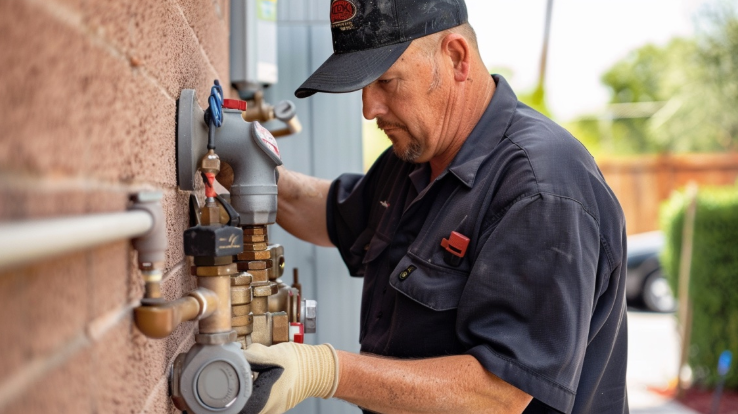
Basements flood; sewage backups happen; and you can stop that risk with a backwater valve. A properly backwater valve installation prevents sewage from flowing back into your lower-level drains, protecting your home and possibly qualifying you for local rebates or insurance benefits.
You’ll learn how backwater valves work, what installation involves, and when to call a pro so you can decide whether DIY or hiring an expert makes sense for your situation. The rest of the article walks through the installation steps, common costs and rebates, and what to expect from a professional install so you can take confident, practical action.
Understanding Backwater Valve Installation
A backwater valve protects your lower-level plumbing by stopping sewage from flowing back into fixtures during sewer surges. You’ll learn what the device is, the types available, and the mechanical principles that make it work so you can choose and maintain the right unit for your home.
What Is a Backwater Valve
A backwater valve is a mechanical device installed in the building sewer that allows wastewater to flow out but closes to block reverse flow. You typically place it on the main sewer line between your house and the municipal sewer or septic connection.
The valve’s primary purpose is to protect basements, laundry rooms, and other lower-level fixtures from sewage backups during storms, main-line blockages, or sewer system overload. Municipalities often require or offer rebates for installation in flood-prone areas, so check local codes and incentives before you begin.
You should treat a backwater valve as part of your home’s critical infrastructure: include it in routine inspections, schedule cleaning yearly or more often if your area has frequent runoff, and document its location for contractors and emergency crews.
Types of Backwater Valves
Two common categories appear in residential work: flap-type (simple check valves) and gate- or swing-type mechanical valves. Flap-type valves use a hinged flap that swings closed under reverse pressure; they are inexpensive and fit easily into small-diameter pipes. Mechanical gate or ball valves offer a more positive seal and are better where code requires a tamper-resistant or tested device.
You’ll also find automatic versus manual-reset designs. Automatic valves close and reopen without intervention, while manual or lockable models provide an added layer of security when you want to physically isolate the house sewer during high-risk events. Material matters too: PVC works for most homes, while cast iron or stainless steel suits commercial or heavy-use installations.
Match valve capacity and pipe size, and confirm clearance for future inspection and maintenance when you select a unit. Incorrect sizing or inaccessible placement are the most common installation problems.
How a Backwater Valve Works
Most backwater valves operate on a simple check principle: normal flow pushes the closure open; reverse flow pushes it closed. In a flap-type, incoming sewage swings the flap outward to leave the house; when sewer pressure reverses, the flap snaps back against a seat to form a seal. Mechanical gates or ball valves use a guided closure element that drops or rotates into a seat for a tighter seal under backflow conditions.
Some designs include a water-tight inspection cover and a test or bypass port so you can confirm operation without removing the valve. You should inspect the seating surface and hinge or guide mechanism for debris, biofilm, or corrosion at least annually. Keep a small toolkit and manufacturer instructions near the valve location so you can clear blockages or perform a shut-off quickly if needed.
See also: Basement Renovations: Practical Upgrades to Boost Home Value and Functionality
Professional Installation Process
You will see a clear sequence: evaluate the site, excavate and fit the valve, then test and document the work. Each step focuses on correct sizing, watertight connections, and compliance with local plumbing codes.
Site Assessment and Preparation
Start by locating the main sanitary sewer line and the section of your building drain where the backwater valve will install. Your plumber will measure pipe diameter, slope, and the distance to the cleanout and fixtures. Confirm whether the valve fits inside the basement floor, in a pit, or outside in a chamber; each location affects excavation and access requirements.
Check for sewer cleanouts, hydrants, utility lines, and tree roots before digging. Obtain required plumbing permits and notify your municipality if work alters the public sewer connection. Plan for temporary bypass plumbing if your property will be without sewer service during the install.
Gather materials sized to your system: the correct valve model for pipe diameter, gasketed adapters, rated backflow fittings, and pipe segments. Prepare tools and safety equipment: saws, couplers, shoring for excavations, and PPE. Clear the work area to allow equipment access and to protect finished floors and landscaping.
Steps for Installing a Backwater Valve
Begin by isolating the section of sewer where the valve will go and remove the existing pipe segment. Cut a smooth, square face on the remaining pipe and dry-fit the valve assembly to verify alignment and slope. Use manufacturer-specified adapters or transition couplings to join dissimilar materials (PVC-to-cast iron, for example).
If installing below grade, excavate a pit sized to allow at least 12–18 inches of working clearance around the valve. Set a stable bedding (crushed stone or concrete pad) and level the valve so its access cover will be flush with finished grade or floor. Make all connections with solvent weld, mechanical couplings, or flange bolts per the valve’s instructions.
Secure the valve in place, ensure the flap or check element moves freely, and reinstall any removed cleanouts with gaskets. Backfill in layers, compacting around the valve to prevent settlement. Restore flooring, slab, or landscaping and install an accessible access cover that allows future maintenance without breaking concrete.
Testing and Inspection After Installation
Perform an initial leak test by running water through fixtures and observing joints and the valve body for seepage. Use a water-tight plug or pressure test per local code to verify the assembly holds the required pressure. Manually actuate the valve flap several times to ensure it opens and closes without sticking.
Document the installation with photos showing orientation, model/serial numbers, and final cover placement. Schedule a municipal or third-party inspection if your permit requires it; be ready to provide manufacturer specs and test results. Explain to the homeowner how to operate and maintain the valve, including regular visual checks and the recommended cleaning interval.
Provide a maintenance log and mark the valve location on as-built plumbing drawings. Give clear instructions on what to do if the valve jams or if you observe sewage odors or backups.