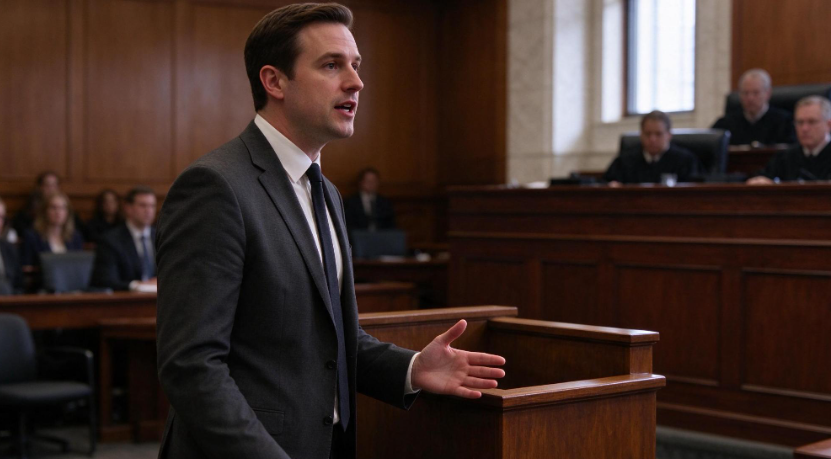
Many people picture a bail hearing as a set courtroom event, with everyone gathered in one room. In Ontario, proceedings can take place in person, by video, or in a mix of the two. The format may affect what the accused person and their family need to confirm before the hearing.
A bail hearing determines whether someone charged with an offence may be released while the criminal case proceeds. Anyone preparing for an upcoming hearing can speak with a criminal lawyer in Toronto to learn which format the courthouse has assigned and what arrangements to make before the hearing date.
How Bail Hearings Are Held
Ontario bail hearings can be held in person, virtually, or in a combination of the two. A mode of appearance describes how someone participates in court: by attending in person, joining by video, or using both formats within the same proceeding.
Someone charged with an offence may attend from a courthouse while another participant joins by video. A video appearance may also mean that the person is at the courthouse, using a designated video room there instead of connecting from elsewhere.
The format affects the practical details of a hearing. Beforehand, the person charged and family members should check the courthouse location and scheduled date, as well as whether the court has ordered an in-person, video, or mixed appearance.
Ontario Court of Justice practice directions set out how criminal proceedings, including bail matters, may be heard. The format used at a particular courthouse or on a given day is not a standing rule for every bail proceeding in Ontario.
Why In-Person Is the Default
For criminal proceedings in Ontario, including bail matters, appearing in person remains the usual starting point. The Criminal Code provisions on judicial interim release allow a court to permit or require virtual participation in certain circumstances. A judicial officer can also set a different arrangement for a particular case.
Guidance from the Ontario Court of Justice says criminal proceedings may be heard in person, virtually, or through a mix of the two. It also states that personal attendance is the legal starting point, while recognizing provisions that allow remote appearances.
A video hearing is not a distinct legal process. The appearance method determines how participants join, but the matter remains a bail proceeding before the court.
Anyone charged with an offence should not assume a video appearance is available just because another court matter used remote technology. The court’s direction for that hearing determines how the person must appear.
When In-Person Attendance Is Required
A court may require an in-person appearance if a custodial institution lacks the resources for a meaningful video bail appearance. The Ontario Court of Justice treats this resource shortage as a practical limit on remote participation in bail court.
If suitable video resources are unavailable, the court may choose between two arrangements:
- The court may order the person charged to attend court in person.
- The court may arrange for a video appearance from a courthouse video suite.
A courthouse video suite is a designated room where a person can appear by video from the courthouse, rather than from a custodial institution. Ontario Court of Justice guidance presents this option for cases where the institution cannot support a meaningful video appearance.
A change in format may confuse family members, since the hearing can still take place by video after the person charged has been brought to the courthouse. The key practical issue is whether the court has arranged a workable format for that bail proceeding.
Court directions may also differ from what family members expected after discussing another case. Record the format confirmed for the hearing, and ask whom to contact if the arrangement remains unclear.
See Also: 7 Ways To Make Family Dental Mornings Less Chaotic
Bail Court Scheduling
Ontario courts use administrative procedures to limit repeat bail-court appearances when a full hearing is not needed. A bail court administrative protocol sets out how the court handles scheduling and other procedural steps in bail court.
The Ontario Court of Justice operates a Bail Court Waiver of Appearance and Bring Forward Protocol. The court says it is intended to reduce administrative appearances in bail court. Under the protocol, some procedural steps can be handled without requiring a separate appearance for each one.
Effective February 24, 2025, the court extended the protocol to bail appearances in Kenora, Dryden, and Sioux Lookout. A bail court scheduling protocol update from the Ontario Court of Justice explains the expansion and the protocol’s purpose.
The notice covering Kenora, Dryden, and Sioux Lookout does not explain the procedure in Toronto. For a Toronto bail matter, the northern Ontario expansion shows that court administration can vary by location. It does not establish that the same protocol applies locally.
An administrative court appearance may deal with scheduling or another procedural issue, rather than the full bail hearing. Someone charged with an offence should ask what the next date is for, whether they must attend, and which appearance format the court has assigned.
What to Do Next
A bail hearing in Ontario may involve a courtroom, a video connection, or both. The assigned format depends on the court’s direction and the practical resources available for the proceeding, so assumptions can create confusion for the person charged and the family supporting them.
Court administration may also reduce some repeat appearances where a local protocol applies. Keep the courthouse location, hearing date, appearance format, and confirmation details together so that the family has one clear record before the hearing.
Check with the courthouse or your lawyer which appearance format applies before the hearing date.