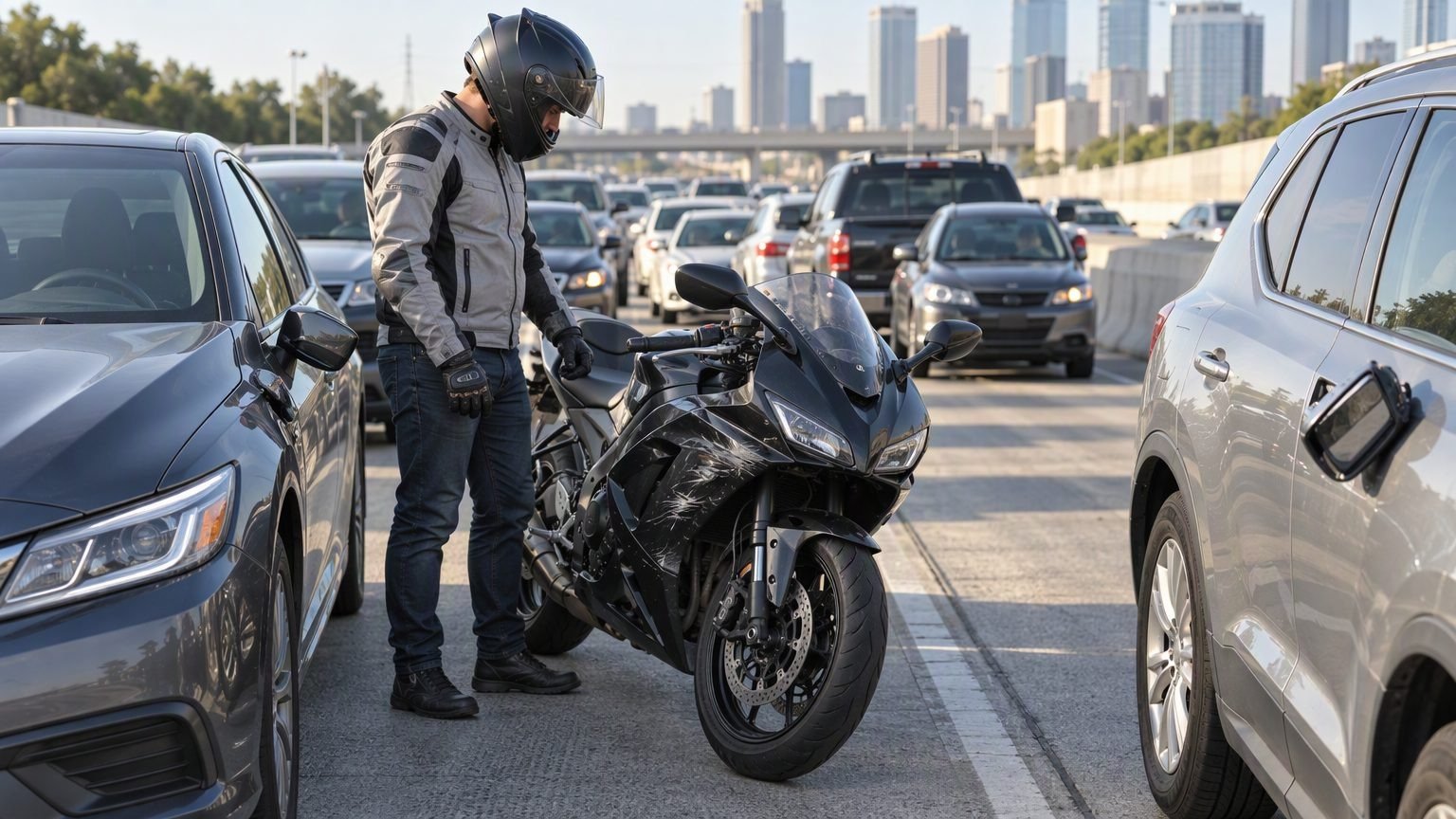
In its Look Twice for Motorcycles Digital Toolkit, TxDOT recorded 9,016 motorcycle crashes and 585 motorcyclist deaths in 2024. After a collision, separate your right to seek compensation from the traffic rule if you’re injured and asking “is lane splitting legal in Texas”.
No. Texas prohibits lane splitting and lane filtering as of 2026, even when another driver caused the crash. Riding between lanes, if it’s alleged, can affect fault without automatically defeating your claim. Whether that maneuver contributed to the collision affects compensation, along with your assigned percentage of responsibility.
Is Lane Splitting Legal in Texas Under Current Law?
No. Traveling between same-direction traffic lanes on a motorcycle is prohibited by Texas Transportation Code § 545.0605. While occupying another vehicle’s lane, you’re also barred from overtaking that vehicle.
Between moving lanes, riding counts as lane splitting; lane filtering usually involves stopped or slow traffic. Even stopped traffic offers no exception. Whatever you call it, the maneuver falls under Texas lane splitting laws.
Within one lane, two riders may travel side by side. Passing between lanes or overtaking within a vehicle’s lane is different legally.
Before crash responsibility gets assigned, Texas applies the rule. A driver can move unsafely into your motorcycle’s path even while you’re violating the rule. Examine each vehicle’s position and movement to separate the violation from its contribution to the impact.
See also: 5 Ways Periodontics Improves Quality Of Life For Patients
Does Lane Filtering Affect Fault in Texas?
With evidence that riding between lanes helped cause the crash or made avoiding it harder, lane filtering can affect fault. Your percentage of responsibility isn’t established by an allegation alone.
The motorcycle’s position, your insurer might argue, reduced visibility or put it where drivers wouldn’t reasonably expect a vehicle. Against traffic conditions and the impact’s timing, test that argument. Accepting it requires more than someone using the phrase “lane splitting.”
Through their conduct, another driver may have contributed too. Besides an unsafe lane change that could narrow your escape space, distraction or failure to signal may matter. Failure to keep a proper lookout could matter too, along with excessive speed.
You can review rules that may apply after a collision in the general background on Texas motorcycle laws.
Before contact, focus on what each person did. For example, weigh evidence that a car crossed a lane marking before the motorcycle approached against evidence of your speed and position. That hypothetical example makes no finding about your crash. Recordings and scene measurements must establish the actual sequence, along with other evidence.
What Evidence Matters When Lane Splitting Is Disputed?
Whether the motorcycle was between lanes, and how the crash happened, can be established with help from video and electronic data. Alongside independent witnesses’ accounts, consider vehicle damage and final resting positions, with roadway marks relevant too.
- Lane positions and movement captured on helmet-camera or dashboard-camera footage, plus recordings from traffic cameras or nearby businesses
- Skid marks and vehicles’ final positions weighed alongside damage patterns and debris locations
- Witnesses’ statements about seeing the motorcycle before impact
- Lane markings in time-stamped scene photographs, with traffic conditions alongside sight obstructions
- Possible distraction or speed and braking addressed through available vehicle data or phone records
In crash reports, statements and citations can accompany the responding officer’s observations. Civil responsibility isn’t necessarily settled there. The report may describe the scene through an officer who arrived afterward and didn’t witness the collision.
Original files need to stay intact, without edits or public posting. Witnesses can forget details while recordings get overwritten and vehicles are being repaired. Copy photographs and repair documents into a separate folder; video needs keeping unaltered, with its timestamps.
Physical and digital evidence recorded at the time can tell more than unsupported memories when crash accounts conflict. Ask witnesses what they actually saw before impact, without handing them a version to confirm. Their contact information needs recording too.
How Texas Comparative Fault Works for Motorcycle Crashes
In Texas, an injured rider with 50% or less responsibility assigned can recover damages reduced by that percentage. If you’re assigned more than 50% responsibility, Texas’s proportionate-responsibility rule bars you from recovering damages.
Chapter 33 of Texas Civil Practice and Remedies Code contains these rules. Section 33.001 bars damages once assigned responsibility goes above 50%. Section 33.012 reduces what the claimant can recover by their assigned responsibility percentage.
A court hasn’t decided fault just because your insurer proposes a split. At trial, the fact-finder assigns responsibility by looking at the evidence. Traffic citations alone don’t set that percentage; it must reflect what caused the injury or contributed to it.
Those percentages record each person’s assigned fault for the injury. Fault percentages won’t tell you the proven damages or how much insurance is available to pay a judgment.
For the figures below, assume $100,000 in proven damages without factoring in other legal or insurance issues.
| Rider’s assigned responsibility | Effect under the rule | Hypothetical recovery |
| 0% | No comparative reduction | $100,000 |
| 25% | Award reduced by 25% | $75,000 |
| 50% | Recovery allowed, reduced by half | $50,000 |
| 51% | Recovery barred | $0 |
Your compensation gets reduced if you’re assigned fault for lane splitting. Only a total share over 50% cuts off your right to recover.
What Is the Texas Motorcycle Accident Lawsuit Deadline?
The deadline in Texas Civil Practice and Remedies Code § 16.003 generally gives you two years after the crash to file a Texas personal injury lawsuit.
Notifying an insurer or negotiating payment isn’t the same as filing a lawsuit. An unresolved insurance claim doesn’t automatically move the deadline for going to court.
Claims involving a government entity or minor can carry a different deadline or a notice requirement. Those exceptions or notice requirements can also apply if the accrual date is disputed. A deadline exception isn’t something to count on.
With your records saved, have a qualified Texas lawyer confirm the date you need to file. Don’t treat ongoing settlement talks as protection for your right to file a lawsuit.

Related Texas Motorcycle Questions
Can a Motorized Bike Be Street Legal in Texas?
For a bike in the right statutory category, yes. Qualifying electric bicycles aren’t mopeds or motorcycles under the classifications in Texas Transportation Code Chapters 541 and 664. Before checking license and registration rules, look at the bike’s motor and speed; equipment restrictions and road-use limits count too.
May a Motorcycle Proceed Through a Red Light?
No; even if the signal misses your motorcycle, you still have to stop for the red light. Traffic-control signals aren’t optional under Texas Transportation Code § 544.007. With no general “dead red” exception for motorcycles in Texas, you’ll need another lawful route.
Do You Need a License to Ride a Moped in Texas?
Yes, Texas Transportation Code Chapter 521 generally requires Class M authority (sometimes moped-restricted) for riding a moped on public roads. However Chapter 541 defines your moped, you still have to follow the registration rules. The vehicle’s legal category isn’t settled by what a seller calls it.
What Happens If You Ride Without a Motorcycle License?
Texas Transportation Code Chapter 521 allows a stop and citation if you ride without the required license class. A missing license doesn’t by itself establish that you were at fault in the crash. To establish civil fault, you still need evidence from the collision.
Which Motorcycle Does Not Require a Texas License?
A license is generally needed for public-road motorcycle riding under Texas Transportation Code Chapter 521. Chapters 541 and 664 classify qualifying electric bicycles separately, so they don’t need motorcycle licensing. Even with “e-bike” in the ad, check whether the vehicle meets the statutory specifications.
Protect the Evidence and Watch the Deadline
While original footage and scene evidence are available, save them; date your records of communications with the insurer. However quickly negotiations move, the facts of the crash determine when you have to file. This general legal information can’t replace advice about the collision you were involved in. Your next step should follow the documented facts and the applicable Texas law.
Sources
TxDOT, Look Twice for Motorcycles Digital Toolkit (2025).
Texas Transportation Code, Chapters 521, 541, 544, 545, and 664.
Texas Civil Practice and Remedies Code, Chapters 16 and 33.