You want a cladding solution that balances durability, style, and low maintenance — ACM exterior panels deliver on all three by pairing thin aluminum skins with a rigid core for weather resistance, lightweight strength, and clean, contemporary lines. If you need a versatile exterior material that resists weathering, offers wide finish options, and simplifies installation without sacrificing performance, ACM panels are a strong choice.
This article will explain how ACM panels work, what makes different panel systems and finishes unique, and which installation and design factors matter most so you can decide whether they suit your project. Expect practical guidance on performance, aesthetics, and installation trade-offs to help you move from concept to confident specification.
ACM Exterior Panels Overview
ACM exterior panels combine a lightweight aluminum skin with a solid core to deliver durable cladding, consistent finishes, and predictable performance. You’ll see them chosen for weather resistance, design flexibility, and faster installation compared with many traditional systems.
What Are ACM Panels?
ACM (Aluminum Composite Material) panels consist of two thin aluminum sheets bonded to a non-aluminum core. Cores are commonly polyethylene (PE) for general use or fire-retardant (FR) formulations for higher fire-performance needs.
Panel thickness typically ranges from 3mm to 6mm overall, with aluminum faces from 0.3mm to 0.5mm each; this creates a high strength-to-weight ratio that simplifies handling and framing.
Manufacturers apply factory finishes—PVDF, polyester, or anodized—so you get consistent color and UV resistance. You can specify flat, curved, or perforated panels to match façade geometry and design intent.
Key Features and Benefits
ACM panels deliver several measurable benefits: light weight reduces structural load and foundation costs, and rigid cores add flatness and impact resistance.
Weather and UV-resistant factory coatings minimize repainting; typical PVDF finishes meet AAMA performance classes for chalk and fade.
Fire performance varies by core: choose FR cores or test-verified assemblies to meet local code.
Installation advantages include large panel coverage, mechanically fastened or concealed clip systems, and compatibility with rainscreen assemblies to manage moisture and thermal movement.
Maintenance is typically limited to periodic cleaning and inspection of joints and fasteners.
Popular Applications
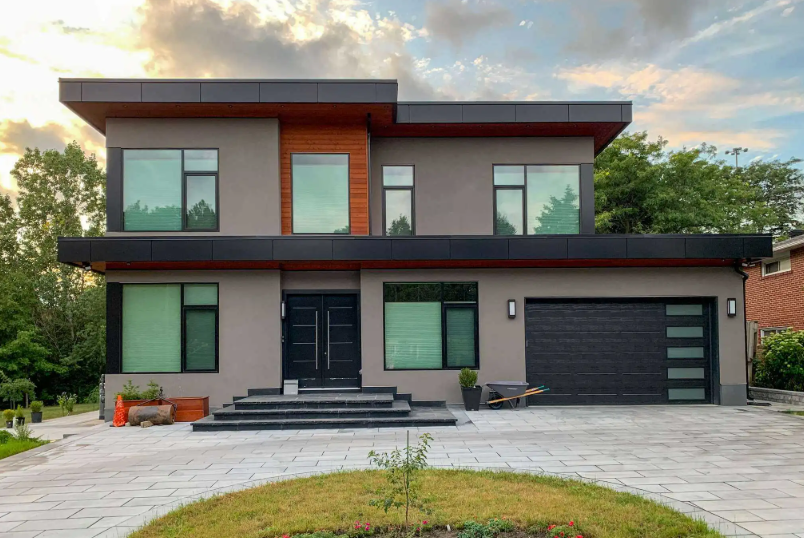
You’ll find ACM panels on high-rise facades, commercial storefronts, and institutional buildings where a modern aesthetic and quick installation matter.
Architectural features such as canopies, column covers, and signage often use ACM for crisp lines and consistent color matching.
Interior uses include feature walls and ceilings where lightweight, flush surfaces and custom colors are required.
ACM also suits renovation projects because panels can retrofit over existing substrates, reducing demolition time and waste.
Installation and Design Considerations
Carefully plan attachment, ventilation, thermal movement, and compliance to ensure durable cladding performance. Select installation methods that match your substrate, prioritize rain-screen ventilation, and confirm material choices meet local fire and structural codes.
Installation Methods
Choose between face-fixed, concealed-fastener, and cassette/rainscreen systems based on structural capacity and aesthetics. Face-fixed systems use visible rivets or screws into a continuous substrate and work for lightweight facades; they are simpler but allow less tolerance for thermal movement. Concealed-fastener systems attach panels to an aluminum or steel carrier with clips or cleats hidden behind the panel, improving appearance and enabling easier replacement.
Cassette systems mount pre-formed panel modules to a subframe. They provide tight tolerances and fast installation on heavy commercial steel or stick-framed walls. In all methods, install a continuous weather-resistant barrier, an air cavity for drainage/ventilation (typically 20–50 mm), and a secondary support system sized for wind loads and sealant back-up. Pre-drill holes where specified and allow for expansion gaps per manufacturer guidance.
Design Flexibility
ACM panels offer wide choices in panel size, finish, and formed profiles to match façade intent. You can use standard flat panels up to 4,000 mm long or narrow strips for rainscreen rhythms; curved and folded panels let you create canopies, column wraps, and soffits. Finishes include PVDF-painted solids, metallics, anodized-look, and custom digital prints, each with specific maintenance and color-fade characteristics.
Plan joint widths and reveal patterns early: typical vertical joint gaps range 8–15 mm depending on expected thermal movement. Factor in panel thickness and core type for resulting flatness and edge details; thicker aluminum faces and mineral-filled cores resist oil-canning and provide better performance for large spans. Coordinate penetrations, flashings, and interface with windows and louvers to maintain continuous drainage and sightlines.
See also: Best Treatment for Acne Scars: Expert Options, Cost, and Recovery
Compliance and Building Codes
Verify fire performance, structural attachment, and weatherproofing against local codes before procurement. Specify the ACM core (PE vs. fire-retardant mineral) that satisfies the jurisdiction’s cladding fire classifications and obtain test certificates (e.g., NFPA 285, EN 13501 where applicable). Keep documentation of manufacturer test data and third-party lab reports.
Design framing and fasteners to meet local wind-load calculations and seismic requirements. Confirm the rainscreen assembly meets required air and water barrier continuity; inspectors often check WRB overlap, flashing at penetrations, and secondary drainage paths. Maintain submittals showing compatibility of sealants, primers, and metal-to-metal joints for warranty and inspection purposes.
ACM Exterior Panels: Durable Cladding Solutions for Modern Facades
You want a cladding solution that balances durability, style, and low maintenance — ACM exterior panels deliver on all three by pairing thin aluminum skins with a rigid core for weather resistance, lightweight strength, and clean, contemporary lines. If you need a versatile exterior material that resists weathering, offers wide finish options, and simplifies installation without sacrificing performance, ACM panels are a strong choice.
This article will explain how ACM panels work, what makes different panel systems and finishes unique, and which installation and design factors matter most so you can decide whether they suit your project. Expect practical guidance on performance, aesthetics, and installation trade-offs to help you move from concept to confident specification.
ACM Exterior Panels Overview
ACM exterior panels combine a lightweight aluminum skin with a solid core to deliver durable cladding, consistent finishes, and predictable performance. You’ll see them chosen for weather resistance, design flexibility, and faster installation compared with many traditional systems.
What Are ACM Panels?
ACM (Aluminum Composite Material) panels consist of two thin aluminum sheets bonded to a non-aluminum core. Cores are commonly polyethylene (PE) for general use or fire-retardant (FR) formulations for higher fire-performance needs.
Panel thickness typically ranges from 3mm to 6mm overall, with aluminum faces from 0.3mm to 0.5mm each; this creates a high strength-to-weight ratio that simplifies handling and framing.
Manufacturers apply factory finishes—PVDF, polyester, or anodized—so you get consistent color and UV resistance. You can specify flat, curved, or perforated panels to match façade geometry and design intent.
Key Features and Benefits
ACM panels deliver several measurable benefits: light weight reduces structural load and foundation costs, and rigid cores add flatness and impact resistance.
Weather and UV-resistant factory coatings minimize repainting; typical PVDF finishes meet AAMA performance classes for chalk and fade.
Fire performance varies by core: choose FR cores or test-verified assemblies to meet local code.
Installation advantages include large panel coverage, mechanically fastened or concealed clip systems, and compatibility with rainscreen assemblies to manage moisture and thermal movement.
Maintenance is typically limited to periodic cleaning and inspection of joints and fasteners.
Popular Applications
You’ll find ACM panels on high-rise facades, commercial storefronts, and institutional buildings where a modern aesthetic and quick installation matter.
Architectural features such as canopies, column covers, and signage often use ACM for crisp lines and consistent color matching.
Interior uses include feature walls and ceilings where lightweight, flush surfaces and custom colors are required.
ACM also suits renovation projects because panels can retrofit over existing substrates, reducing demolition time and waste.
Installation and Design Considerations
Carefully plan attachment, ventilation, thermal movement, and compliance to ensure durable cladding performance. Select installation methods that match your substrate, prioritize rain-screen ventilation, and confirm material choices meet local fire and structural codes.
Installation Methods
Choose between face-fixed, concealed-fastener, and cassette/rainscreen systems based on structural capacity and aesthetics. Face-fixed systems use visible rivets or screws into a continuous substrate and work for lightweight facades; they are simpler but allow less tolerance for thermal movement. Concealed-fastener systems attach panels to an aluminum or steel carrier with clips or cleats hidden behind the panel, improving appearance and enabling easier replacement.
Cassette systems mount pre-formed panel modules to a subframe. They provide tight tolerances and fast installation on heavy commercial steel or stick-framed walls. In all methods, install a continuous weather-resistant barrier, an air cavity for drainage/ventilation (typically 20–50 mm), and a secondary support system sized for wind loads and sealant back-up. Pre-drill holes where specified and allow for expansion gaps per manufacturer guidance.
Design Flexibility
ACM panels offer wide choices in panel size, finish, and formed profiles to match façade intent. You can use standard flat panels up to 4,000 mm long or narrow strips for rainscreen rhythms; curved and folded panels let you create canopies, column wraps, and soffits. Finishes include PVDF-painted solids, metallics, anodized-look, and custom digital prints, each with specific maintenance and color-fade characteristics.
Plan joint widths and reveal patterns early: typical vertical joint gaps range 8–15 mm depending on expected thermal movement. Factor in panel thickness and core type for resulting flatness and edge details; thicker aluminum faces and mineral-filled cores resist oil-canning and provide better performance for large spans. Coordinate penetrations, flashings, and interface with windows and louvers to maintain continuous drainage and sightlines.
Compliance and Building Codes
Verify fire performance, structural attachment, and weatherproofing against local codes before procurement. Specify the ACM core (PE vs. fire-retardant mineral) that satisfies the jurisdiction’s cladding fire classifications and obtain test certificates (e.g., NFPA 285, EN 13501 where applicable). Keep documentation of manufacturer test data and third-party lab reports.
Design framing and fasteners to meet local wind-load calculations and seismic requirements. Confirm the rainscreen assembly meets required air and water barrier continuity; inspectors often check WRB overlap, flashing at penetrations, and secondary drainage paths. Maintain submittals showing compatibility of sealants, primers, and metal-to-metal joints for warranty and inspection purposes.