Walk into any room where someone just unboxed their first proper watch, and you’ll notice something odd. They aren’t checking the time. They’re turning the thing over, reading the engraving on the back, looking for the serial number like it confirms something about who they’ve become.
That moment is the whole game. And most people get the reasoning backwards.
The product was never the point
Here’s the contrarian take: heritage brands don’t sell quality. Plenty of cheaper makers match them on materials and accuracy. What these brands actually sell is a marker, a small ceremony that says you’ve crossed a line in your own life. The bag, the pen, the leather boots, the bottle of aged spirit. These become the physical proof of a milestone, not the milestone itself.
Think about why people buy a particular brand to mark a graduation, a first big paycheck, a fortieth birthday, a promotion. They could mark it with anything. They choose the object that carries a story older than they are. The age of the company becomes borrowed weight. You hand the buyer a piece of a timeline that started in 1853 or 1921, and suddenly their ordinary Tuesday purchase feels stitched into something long and deliberate.
See also: Technology-Focused Learning Strategies
Why old stories sell better than new ones
A founder in an apron. A workshop that survived two wars. A recipe unchanged for a century. These aren’t decoration. They are the spine of the entire pitch.
When a brand keeps repeating its origin, it isn’t being nostalgic for fun. It’s teaching the buyer a lesson: things that last are worth becoming part of. The buyer absorbs that idea and then applies it to themselves. Owning the object becomes a quiet promise to also endure, to also be the kind of person who values permanence over the disposable.
This is the psychology underneath the price tag. People will pay a steep premium not for the leather but for the membership. You aren’t buying a coat. You’re joining a line of people who have all owned this coat, going back decades, and that line keeps walking forward after you.
The ceremony matters more than the item
Notice how the expensive places slow everything down. The wrapping takes longer. The box is heavier than it needs to be. There’s a card, a cloth pouch, sometimes a handwritten note. A staff member walks you through care instructions as if you’ve adopted something living.
None of this is accidental friction. The slowness is the design. A rite of passage needs a threshold, a pause, a sense that you are stepping from one stage into another. Fast checkout kills that feeling. Heritage brands build the pause back in on purpose, because the ritual is what converts a transaction into a memory you’ll repeat to people for years.
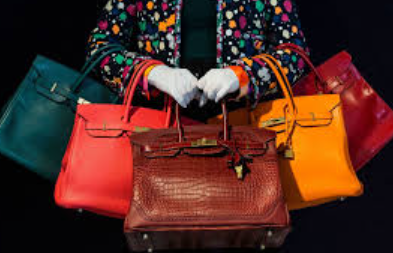
There’s a reason people keep the paperwork too. A Louis Vuitton Receipt rarely ends up in the bin the way a grocery slip does. Buyers tuck it inside the box, slide it into a drawer, sometimes frame the moment in their memory around it. That little piece of paper stops being a record of payment and turns into a small certificate of the day they arrived. I’ve watched buyers describe the purchase itself more vividly than the product. The trip to the store. The decision. The first time they wore it out. The object becomes a hook that the whole story hangs on.
Passing it down is the real strategy
Here’s the angle most discussions skip entirely. The deepest move these brands make isn’t aimed at the buyer at all. It’s aimed at the buyer’s children.
A watch you hand to your son. A piece of jewelry that goes to a granddaughter. A trunk with three sets of initials carved inside. When a brand designs an object to outlive its owner, it stops being a product and becomes an heirloom, and an heirloom does something no advertisement can: it recruits the next generation before they’re old enough to spend a cent.
Sometimes the paperwork gets passed along with the object. A decades-old Louis Vuitton Receipt tucked inside an inherited trunk does quiet work, proving the piece is real, marking when it entered the family, and reminding the new owner they’re holding something that mattered enough to keep the record. The child grows up watching a parent treat the object with care. They absorb the meaning early. By the time they can buy their own, the brand is already woven into their sense of arrival, of having made it, of stepping into adulthood properly. That’s not marketing anymore. That’s inheritance doing the selling.
What this means if you’re on the buying side
Knowing the mechanics doesn’t ruin the experience. It sharpens it.
If you’re about to mark a moment with a meaningful purchase, separate the two things you’re actually paying for. One is the object and its real, measurable quality. The other is the ceremony, the story, the sense of joining something. Both can be worth it. But they have different price ranges, and confusing them is how people overspend chasing a feeling a cheaper item would have delivered just as well.
The genuine heritage purchase is worth it when the object will truly last, when you’ll actually pass it on, and when the milestone deserves a permanent marker. It’s a poor deal when you’re paying heirloom prices for something you’ll replace in three years.
The rite of passage is real. The brands just figured out, long before the rest of us, that people don’t remember what they bought. They remember who they became while buying it.